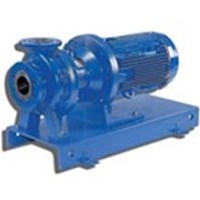
What is a Centrifugal Pump?
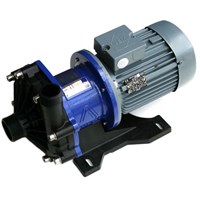
A centrifugal pump is probably the most common pump
in use. A rotating impeller draws fluid along the axis of rotation, imparts
kinetic energy by "flinging" material laterally. The pump cavity
channels the flow in one direction, towards your outlet piping.
Why Centrifugal Pumps?
Why Magnetically Driven?
-
No mechanical seal eliminates the most common
leakage point.
-
Best choice when dealing with chemicals that are
aggressive or can produce harmful vapors.
-
Good choice for fluid applications under
partial vacuum.
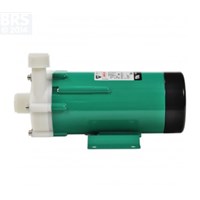
MDM Series offers features that ANSI-Mag,
Innomag and ITT Goulds can't:
-
Run Dry capability from strong centering
magnets that ensure your pump impeller won't rub against the back of the
impeller case.
-
Cavitation protection from cool-running
rear contact surfaces.
-
Temperatures to 150° C
(302°
F)
-
Up to 20% entrained air
handling capability
-
Up to 10%, 50-micron solids
handling capability
-
Separate impeller, front
casing and rear casing liners. Unlike the competition, there is no need
to purchase the impeller/driven magnet; front casing/liner; or rear
casing/support shell as assemblies. All these items are available as
individual components, which reduces spare parts costs to a fraction of what
competitors demand!
-
Hollow Spindle is dual
supported for better heat dissipation and greater strength.
-
Back Pullout Design allows
inspection of the pump without having to disconnect it from process piping.
-
High Purity from ETFE or
PFA encapsulated magnets and impeller, and removable ETFE casing. If parts
per billion or parts per trillion ionic purity determine the success of your
process, look no further!
-
Flows up to 350 GPM
-
Heads over 350 ft
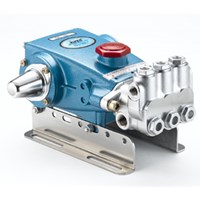
What is a Piston Pump?
A piston pump is like a car engine-but backwards. External power moves a
reciprocating piston. The piston moves the process fluid. Valves keep the flow
moving in the correct direction.
Why Piston Pumps?
-
Piston pumps offer very high pressure capabilities, as well has high
reproducibility.
-
Multiple pistons, when staged out of phase, can offer very low pulsation.
Why Cat Piston Pumps?
-
ISO9001 manufacturing facility ensures reproducible quality, every time.
-
Concentric centerless ground high density ceramic plungers use a graphite
impregnated surface maximizes your seal life.
-
Long lived seals, from proprietary seal material.
-
Excellent inventory and short lead times.
Typical Applications
-
Flow rates up 450 GPM and up to 10,000 psi.
-
Machine tool flushing
-
Car wash systems
-
High pressure washing
-
Reverse Osmosis (RO) systems
-
Chemical injection
-
Call us at 888-289-8787 to discuss your application or BPH's Trial Program!
What is a Piston Pump?
A piston pump is like a car engine-but backwards. External power moves a
reciprocating piston. The piston moves the process fluid. Valves keep the flow
moving in the correct direction.
Why Piston Pumps?
-
Piston pumps offer very high pressure capabilities, as well has high
reproducibility.
-
Multiple pistons, when staged out of phase, can offer very low pulsation.
Why Hypro Powerline Piston Pumps?
- Patented, one piece plunger guide cartridge provides improved guiding surface for superior alignment.
- Precision machined SS valve and seats provide chemical resistance
- Long lasting drive system with heavy duty roller bearings
- Stainless stell lower plungers and ceramic upper plungers offer high pressure capability and chemical resistance
- Easy-to-replace packing can be serviced in just a few moments
Typical Applications
-
Flow rates up 4 GPM and up to 3,000 psi.
-
Machine tool flushing
-
Car wash systems
-
High pressure washing
-
Reverse Osmosis (RO) systems
-
Chemical injection
-
Call us at 888-289-8787 to discuss your application or BPH's Trial Program!
What is a Centrifugal Pump?
A centrifugal pump is probably the most common pump in use. A rotating impeller
draws fluid along the axis of rotation, imparts kinetic energy by "flinging"
material laterally. The pump cavity channels the flow in one direction, towards
your outlet piping.
Why Centrifugal Pumps?
-
Mechanical Simplicity. Only one moving part.
-
Most economical choice in terms of price-to-flow
-
Tolerance to solids
Why Iwaki-Walchem Mag Drive Centrifugal Pumps?
MD Series
-
Twin Bearing System
handles thrust loads and extends service life.
-
Hollow Rotating Element and Internal Cooling Circuit
reduces bearing temperature for extended service life
-
Compact and Energy Efficient Design
-
Up to 35.6 GPM or 39 ft head (16.9 psi)
MDH-D Series
-
Run Dry Capability from Pinpoint Thrust Bearing which balances
the magnet capsule and impeller assembly to eliminate heat generation and
allows the pump to be operated in a dry running mode for up to 8 hours
(combined). Running any
pump dry is never a good idea, but with this bearing, you significantly reduce
the risk of trashing a pump.
-
Better Bearing Cooling from Bearing Flush Grooves
which insure there is always a clear path for the process fluid to move through
the bearing system, thus bearings are adequately cooled.
-
Integral Thrust Surfaces prevent contact of the magnet capsule with the
rear casing under abnormal operating conditions--thus extending pump life.
-
Lower Cost of Repair
from a impeller that can be replaced with your original magnet assembly.
Additionally, there are only five assemblies to work with!
-
Increased Baseplate Survivablility
from a reinforced plastic pump base.
-
Up to 150 GPM or 102 ft head (44 psi).
MDH-F Series
-
The MDH-F Series is similar in construction to the MDH but has a wetted parts
of fluoroplastic for high purity applications.
-
Up to Up to 150 GPM or 102 ft head (44 psi).
MDF-L Series
-
The MDF-L Series is similar in construction to the MDH but has a flouroplastic
liner inside a heavy duty iron casing for high purity applications.
-
Up to 150 GPM or 135 ft head (57 psi).
SMD Self-Priming
-
Run Dry Capability from Pinpoint Thrust Bearing which balances
the magnet capsule and impeller assembly to eliminate heat generation and
allows the pump to be operated in a dry running mode for up to 8 hours
(combined). Running any
pump dry is never a good idea, but with this bearing, you significantly reduce
the risk of trashing a pump.
-
Superior Priming
from patented priming chamber. Fill the resevoir once and you get 13' self
priming in three minutes for the life of the pump installation.
-
Up to 75 GPM or 50 ft head (21 psi).
MDM Series
-
Run Dry capability from strong centering magnets
that ensure your pump impeller won't rub against the back of the impeller case.
-
High Purity from ETFE or PFA encapsulated magnets and impeller,
and removable ETFE casing. If parts per billion or parts per trillion ionic
purity determine the success of your process, look no further!
-
Hollow Spindle is dual supported
for better heat dissipation and greater strength.
-
Back Pullout Design lets you inspect the pump without having to
disconnect it from process piping
-
Priced very competitively
on a given size, and we are often a more efficient running pump.
-
Up to Up to 350 GPM or 185 ft head (80 psi).
MDE Series
-
Fully retrofittable into existing ANSI
pump installations with no requirements for piping changes.
-
Chemical resistance and wide range potential applications from
available in ETFE or PFA materials.
-
Low cost of ownership with field replaceable front casing
liner.
-
SiC bearing and thrust surface offers one common bearing material
to cover a wide range of applications.
-
Longer service life from flushed bearing groove.
-
Up to 120 GPM or 280 ft head (121 psi).
MX Series
-
Better efficiency, higher pressure, lower power required, greater flow
from true volute casing. A volute casing channels the process
fluid.
-
Run Dry capability from strong centering magnets
that ensure your pump impeller won't rub against the back of the impeller case.
-
Better cooling for longer life
from heat dissipation holes, flush grooved bearing, and self-radiating
shape. In dry run mode, air is channeled to bearing surfaces. In the (strongly
preferred) flooded inlet mode, process fluid is effectively forced through
bearing assembly for more effective cooling.
-
Reduced risk of cavitation and longer service life from a
spindle that is supported on both ends. Many competitive designs
have a spindle that acts like a cantilever or "Diving board" because they are
attached only in the rear of the pump casing.
-
Flexibility. Each size has both a standard and a high head
impeller.
-
Protection from mistakes. Piping connections are male.
Should a connection be overtorqued, the relatively inexpensive pipe will
usually fail before the more expensive pump case.
-
Lower maintenance costs. The impeller and magnet on sized
MX(F)250-403(H) are separate parts. Should an impeller need to be
resized, or a magnet replaced, we offer a product with lower parts costs.
-
Increased relability from spline connection on
MX(F)402-403(H).
Spline and pin construction prevents impeller from coming apart during
accidental reverse rotation.
-
Up to 132 GPM or 101 ft head (43 psi).
Typical Applications
-
Transfer of virtually any material, corrosive or otherwise. Iwaki-Walchem
Centrifugal pumps are all plastic in their core construction, so are perfect
for a a wide variety of fluids. It's not question of where you use an
Iwaki-Walchem pump for, it's a question of where you don't use them.
-
Call us at 888-289-8787 to discuss your application or BPH's Trial Program!
What is a Flexible Impeller Pump?
A multi-vaned flexible rubber impeller rotates within an asymmetric pump
cavity. The only wear parts are the impeller itself and a mechanical seal.
Why Flexible Impeller Pumps?
-
Excellent Self-Priming pump. 15' dry suction lift on most fluids.
-
Excellent Choice for air-entrained products
-
Excellent Choice for shear sensitive products
-
Available in a sanitary design
-
Reversible rotation
-
Moderate solids handling capability
Why Jabsco Flexible Impeller Pumps?
-
Product integrity and cleanliness. Selected models of Jabsco Flexible Impeller
pumps are Strip-in-place cleanable. An appropriate cleaning procedure minimizes
the risk of quality control issues.
-
Impeller replacement cost is quite reasonable, especially compared to a
floating rotor design
Typical Applications
-
Any fluid up to 20,000 CP, or 60 PSI, or 100 GPM
-
Transfer of food grade materials such as dairy products, cosmetics, foods,
sauces, wines, fruit juices, etc.
-
Call us at 888-289-8787 to discuss your application or BPH's Trial Program!
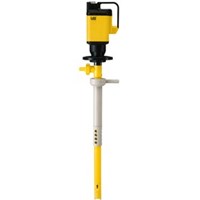
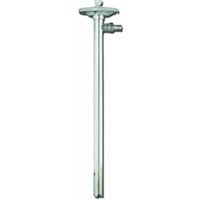
What is a Drum Pump?
A drum pump consists of a pump tube, which is typically inserted into a drum or
tote of your material. The pump elements are located at the bottom of the tube.
A separate and modular motor is mounted atop the tube to drive the pump’s
rotating element.
Why Drum Pumps?
-
Safety. Eliminate exposure from hand pumping.
-
Low cost of ownership from few moving parts
-
Pulsation free
-
Inherent flooded suction
-
Seal-less and quiet
-
Available in a variety of materials including Polypropylene, PVDF, Stainless
steel, Aluminum, Hastelloy C.
-
Available in pump tube lengths that match your needs.
Why Lutz Drum Pumps?
Lutz’s Hand Wheel
-
Motor quickly connects to pump tube, acts as handle. Enables a dedicated pump
tube for a given chemical to minimize cross contamination. Easily switch motors
between tubes. Lutz’s hand wheel was invented in 1962 and continually improved
upon.
Flange/Bearing Housing
-
Assembly is in anodized alloy, electroless nickel plated for chemical
resistance.
-
Has cooling fins for heat dissipation
-
Weep hole/fume exit port keeps vapor phase material from corroding your pump
and motor
Other Benefits
-
Connection options include 1/2”, 3/4”, 1” 1 ¼” hose barb, or hard piping
-
Drive shaft is constructed of 316SS or Hastelloy C
-
Guide bushing is of chemically resistant and self-lubricating Tefzel
-
Pump foot is in chemically resistant and sturdy PVDF. Design easily snaps on
and has no wearing threads
Typical Applications
-
Chemical Transfer up to 56 GPM or 30 PSI.
-
Dispensing of chemicals from drums or totes.
-
Emptying drums or totes
-
Call us at 888-289-8787 to discuss your application or BPH’s Trial Program!
What is a Gear Pump?
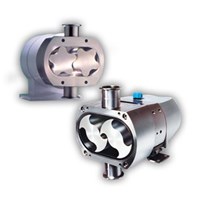
A "Spur Gear" or "External Gear" pump has two interconnected gears that rotate
within a figure-eight shaped cavity. Fluid is trapped between the gear teeth
and the cavity wall, and is transported along the inner walls of the pump
cavity.
Why Gear Pumps?
-
Gear pumps are an ideal choice for viscous products.
-
Gear pumps lose performance gradually, and generally won't fail
catastrophically.
-
Since they are positive displacement, the flow rate degradation is directly
proportional to TDH.
-
Gear pumps don't shear fluid as much as other pump technologies.
-
Gear pumps are essentially pulseless positive displacement pumps. This makes
them ideal for pulse sensitive applications or where you need to install a
flowmeter near the pump output.
Why Oberdorfer Centrifugal Pumps?
-
Quiet operation, longer gear life, and less product shear from helical
gears
-
Longer bearing life from slotted bearing surfaces
which balances axial load
-
Reduced NPSHr, and greater installation flexibility from larger port size
-
Better sealing and no cold flow with TFE Encapsulated o-rings.
This reduces the need for re-torquing> at start-up, longer seal life, and
reduces head related shrinkage
of the pump body
-
Reduced likelihood parts will get damaged during pump repair and
re-assembly because Bearing and wear plate function are combined.
-
Available with the "big three" of sealing concepts. Magnetic Coupling,
Mechanical Seals, or packing Mechanically Sealed ChemSteel Pumps
-
Flow path on all pumps can adjust for pressure in low vapor pressure fluid
applications
-
Pratt Key in magnetically coupled design is much easier to work with than
Woodruff keys found in competitor's products
Magnetically coupled ChemSteel Gear Pumps
-
Reduced eddy current heating effects in magnetic coupled pumps from exclusive
cooling loop
-
Flully encapsulated magnet hub protects magnet from chemical attack
in magnetic coupled pumps.
Typical Applications
-
Flow rates up 30GPM and 150 psi differential pressure and viscosities up
to 20,000 cp
-
Metering. Though often not thought of as a metering pump, Oberdorfer
gear pumps are more than accurate enough for most metering applications
-
Polymers, acids, caustics, oxidants and reductants
-
Call us at 888-289-8787 to discuss your application or BPH's Trial Program!
What is a Centrifugal Pump?
A centrifugal pump is probably the most common pump in use. A rotating impeller
draws fluid along the axis of rotation, imparts kinetic energy by "flinging"
material laterally. The pump cavity channels the flow in one direction, towards
your outlet piping.
Why Centrifugal Pumps?
-
Mechanical simplicity. Only one moving part.
-
Most economical choice in terms of price-to-flow
-
Tolerance to solids
Why Price Centrifugal Pumps?
-
Most versatile centrifugal pump
-
Quick response to unusual requirements or especially rapid delivery needs
-
Wide range of seal options
-
Availability of magnetically driven pumps
Typical Applications
-
Transfer of virtually any material, corrosive or otherwise. It's not a question
of what you use a Price pump for, it's what don't you use them for.
-
Call us at 888-289-8787 to discuss your application or BPH's Trial Program!
What is a vertical pump?
A vertical pump is a centrifugal pump whose motor is mounted in an "up and
down" orientation. This means the fluid and motor are separated by gravity and
a fume barrier, not a more elaborate mechanical seal or magnetic coupling. The
key advantage is cost.
Why vertical pumps?
-
Vertical pumps are often an economical choice for a given application
-
Vertical pumps are ideal for circulation baths, coolant, or filtration.
Why Webster Vertical Immersion Pumps?
-
Optimum chemical resistance with choice of CPVC Corzan®, fiberglass reinforced
Polypropylene, or PVDF Solef®
-
No metal in contact with fluid being pumped
-
Seal-less design eliminates leaking, costly seal replacement and down time
-
Viton® "O" ring end cover seal allows mounting in liquid, or with inlet
extension
-
Non-overloading, continuous duty totally enclosed motors
-
Teflon® fume barrier protects motor end bell and bearings from corrosion caused
by vapor or fumes
Typical Applications
-
Flow rates up to 130 GPM and up to 115 feet of head
-
Perfect for aeration, agitation, filtration, recirculation, spraying, transfer
-
Call us at 888-289-8787 to discuss your application or BPH's Trial Program!
What is Air Operated Diaphragm Pump?
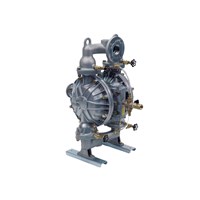
An air operated diaphragm pump uses compressed air to drive two flexible,
elastomeric diaphragms. Four check valves are used to maintain discharge
pressure and control flow direction.
Why Air Operated Diaphragm Pumps?
-
Arguably the most "bullet proof" pump technology. Very tolerant of solids, or
viscous materials.
Excelent for biodiesel pump applications.
-
In the event of a dead head condition, the air operated diaphragm pump simply
stops running, instead of breaking shafts and valves.
-
Air operated diaphragm pumps are intrinsically safe when properly grounded.
Why Yamada Air Operated Diaphragm Pumps?
-
The finest air valve made, period.
Yamada air valves are non-lubricated. They don't attract dirt, run longer, and
are more reliable. The valves are also spring assisted, and use an internal
geometry that reduces water build-up within the valve. BPH is so confident of
the performance of this valve, we are more than willing to embark on a trial
program. Call for details.
-
Short stroke length with a larger diameter diaphragm actually gives you
increased diaphragm life from decreased mechanical stress.
-
Two independent pilot valves have a static seal instead of a dynamically sealed
and coupled pilot valve found on most competitive designs. This leads to more reliable
operation.
Typical Applications
-
Transfer of materials up to 166 GPM or 100 PSI.
- Biodiesel Manufacture
-
Powder transfer applications
-
Explosion-proof environments.
-
Call us at 888-289-8787 to discuss your application or BPH's Trial Program!
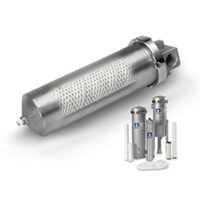
What Filtration Is Available?
We offer filter housings suitable for use with cartridge or bag filters. Call us if you need bases or pumps for a complete system.
Why Cartridge or Bag Filter Assemblies?
-
Cartridge and bag filters are used to "scrub" fluids and remove particulates of all kinds. Typically, the pore size of the filter media dictates the particle size distribution that move past the filter media. Smaller pore sizes remove more particulate.
-
Bag filters are used for lots of larger particles. Cartridge filters are typically better suited to removing smaller particulates.
Why Velocity Cartridge and Bag Filter Assemblies?
- We include a sample port/air bleed valve and pressure gauge and guard. We feel this is equipment that should be on every filter housing, so we include it as standard. This means safer operation, and quicker installation for you.
-
We use a gasketed top cover that is secured by stainess steel washer/bolt assemblies. Compared to other filter housings, this is just a tougher, more resiliant way of securing your lid. The benefit? Longer life and lower total cost of ownership.
Typical Applications
-
Max filtration rates from 400 GPH to 28,000 GPH.
-
Removal of particlate matter prior to water treatment.
-
Removal of particulate matter in plating applications.
-
Call us at 888-289-8787 to discuss your application or BPH's Trial Program!
|